#Sangpourcent and menstrual products
#Sangpourcent :
An innovative project to combat period poverty
The #Sangpourcent project is an initiative dedicated to menstrual health that aims to provide period protection kits to women in precarious situations, particularly young women and students. This programme provides free and easy access to essential menstrual products in order to remove barriers to this basic need. In addition to products, #Sangpourcent offers clear and tailored information resources to raise awareness.
By innovating through easy access, beneficiaries can visit the center in Luxembourg City to receive free menstrual products, a valuable resource for ensuring hygiene and well-being.
*This promotion is valid while stocks last. All products are subject to availability. More information available at all Planning Familial Luxembourg centers.
Why #Sangpourcent is essential: the challenges of period poverty
Period poverty is a public health issue that affects many young women, impacting their well-being and academic success. In Europe, approximately one in three female students struggles to afford menstrual products, a reality that often leads to school absenteeism and negatively impacts self-confidence.
In Luxembourg, this problem also affects young girls and students, exacerbated by the taboo surrounding menstruation. This context creates situations where:
- 67.5% of girls aged 12 to 19 are reluctant to ask for help with protection at school.
- 72% of girls start their periods before the age of 13, but only 50% receive the necessary information.
- 8 out of 10 girls experience stress related to menstruation at school.
#Sangpourcent: material support, advice and education
The #Sangpourcent project is not limited to distributing kits: it includes a strong educational component to inform young girls about their bodies and break taboos. This educational support is designed to reduce the stigma surrounding periods and boost self-esteem.
#Sangpourcent is aligned with the objectives of the National Plan for Emotional and Sexual Health, promoting equitable access to menstrual products and equality in education. Supported by the Planning Familial Foundation and the Zonta Club Luxembourg, #Sangpourcent aims to create an inclusive environment, offering every young girl and woman the necessary and accessible support.
Guide to menstrual products
Menstruation is natural and normal
Menstruation, or period, directly affects almost 50% of all humans throughout a large part of their lives. Let’s talk openly about menstruation and celebrate this normal and natural experience to eliminate stigmatization and to create an environment of understanding, without shame or taboos.
A menstrual cycle can be longer or shorter than 28 days (most often between 21 and 36 days). If menstruation is late or has stopped, always take a pregnancy test and consult a doctor or Planning Familial.
With all intravaginal menstrual products there is an increased risk of toxic shock syndrome (TSS). This is an infectious disease caused by staphylococci and sometimes also streptococci. It is important to note that period products are not the cause of TSS, but bacteria may start to grow rapidly on the products and produce toxins, especially if they are not used correctly or changed regularly. When using internal period products, bacteria may become trapped in the vagina and from there enter the bloodstream, which subsequently may trigger a toxic shock in the body.
How to choose your menstrual products?
Menstrual products can be divided into two categories:
- external products, such as disposable menstrual pads as well as menstrual underwear;
- internal products, such as tampons, softtampons, menstrual sponges and menstrual cups.
Whichever product you choose, it may take a little practice to get used to it. Here is our guide to help you use your chosen product correctly.
Choosing to use menstrual products is a personal decision.
The 6 menstrual products available

Disposable menstrual pads are designed to absorb the period fluid and to provide an adequate protection. The
pad is attached to the underwear with an adhesive strip on the back so that the soft, absorbent side is facing up towards the vulva. Remember to change your pad regularly (every 4-6 hours) and to dispose of the used ones in a rubbish bin.
- The advantages:
- Can be worn overnight.
- Available in different sizes, shapes, absorbencies, with or without wings…
- The disadvantages:
- Less environmentally friendly.
- Can be uncomfortable during physical activity.
- Can develop a more intense odor in warmer temperatures, with increased physical activity or depending on their material.

Period underwear, also called menstrual underwear resembles conventional underpants, but with an additional layer that is absorbent and leak-proof. They come in different styles, a variety of fabrics and absorbencies. It is recommended to wear them for a maximum of 12 hours and to afterwards soak them with cold water before putting them in the laundry. Menstrual underwear should not be tumble dried.
- The advantages:
- Reusable (ecologically friendly).
- Comfortable during all everyday activities.
- The disadvantages:
- Need to be washed after each use.
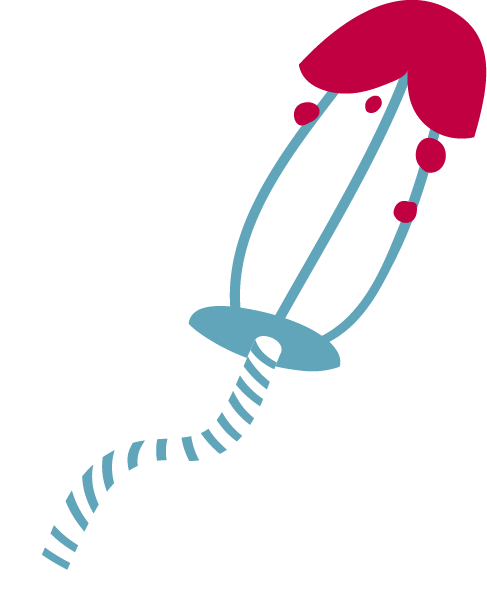
Tampons are single-use intravaginal products that absorb the period fluid. They come with a string for easy removal. Tampons are available in different sizes and absorption levels, with or without an applicator.
Application:
Wash your hands before getting into a comfortable position (squatting, lying down, standing or with one leg raised). Remove the tampon from its packaging and pull out the small string. Insert the tampon into the vagina, aiming towards your lower back. The string must remain outside. The tampon is in place when you can no longer feel it. Wash your hands after inserting the tampon and change it regularly (about every 4 hours). To remove the tampon, gently pull on the string, wrap it in paper and dispose of it in the rubbish bin.
- The advantages:
- Different absorption levels.
- Ideal for certain sporting activities, such as swimming.
- The disadvantages:
- Less environmentally friendly.
- Risk of TSS.
- Note:
- A tampon cannot get lost in your body.
- Tampons have no effect on the hymen (vaginal ring).
- To avoid toxic shock syndrome (TSS), change the tampon regularly. Preferably use menstrual pads or menstrual underwear at night.

The menstrual cup is a flexible receptacle (made of natural rubber or medical silicone) which is inserted into the vagina to collect the menstrual fluid. It can be reused with every menstrual cycle and over the course of several years.
Application:
Wash your hands and get into a comfortable position (f. ex. squatting or with one leg up). Fold the cup* flat and carefully insert it into the vagina. Once in place, it must not be uncomfortable. To remove it, squeeze the bottom tip to release the seal and gently pull the cup out. Empty the contents and wash the cup with lukewarm water before inserting it back into the vagina. To sterilize it, the menstrual cup should be boiled with hot water at the end of the period.
*Read the leaflet supplied with each cup.
- The advantages:
- Eco-friendly and economical.
- Available in different sizes and models.
- The disadvantages:
- Harder to clean in public places or without access to water.
Risk of TSS.
- Note:
- If you use an IntraUterine Device (IUD), do not pull out the cup abruptly. This could displace the IUD, reduce its effectiveness and thus lead to an unwanted pregnancy.

The soft tampon, which is made from soft, flexible foam, is an alternative to conventional tampons. Unlike regular tampons, it is available with or without a string, but is inserted in the same way as a regular tampon.
Application:
Wash your hands thoroughly. Find a comfortable position (standing, squatting, lying down). Gently insert the Softtamp by pushing it towards the lower back, leaving, if attached, the string outside for removal. Change it approximately every 4 hours. To remove it, gently pull on the string or, if it does not have a string, remove it manually.
- The advantages:
- Ideal for certain sporting activities such as swimming.
- Can be used during sexual intercourse.
- The disadvantages:
- Less environmentally friendly.
- Risk of TSS.
- Note:
- A softtampon cannot get lost in your body.
- The softtampon does not affect the hymen.
- To avoid a toxic shock syndrome (TSS), make sure to change the softtampon regularly. Preferably use menstrual pads or menstrual underwear at night.

The menstrual sponge is a natural and reusable period product made from sea sponges. The menstrual sponges have been processed in a way that they can be in contact with the vaginal mucosa.
Application:
Before using for the first time, sterilise the sponge. Moisten the sponge to facilitate insertion. Get into a comfortable position and insert the sponge into the vagina. To remove, gently grasp the sponge. Rinse your sponge with cold water approximately every 2 to 8 hours. Wash it with mild soap after each cycle. Good care is essential to prevent the growth of bacteria. It can be reused for 6 to 10 cycles.
- The advantages:
- Ecological and economical.
- Natural: contains no chemicals.
- Can be used during sexual intercourse.
- The disadvantages:
- Difficult to wash in public places or without access to water.
- Less absorbent than other menstrual products.
- Risk of TSS.
- Note:
- A sponge cannot get lost inside your body. However, it may take some time to get used to inserting and removing it.
- If your menstrual sponge is too big, you can easily cut it to size with clean scissors.